01
Research
Developing and testing ways to understand individual fit, structural identity and recurring patterns without collapsing people into fixed types.
Human systems · Inner and outer transformation
An independent field of research and practice at the intersection of consciousness, work, technology and community.
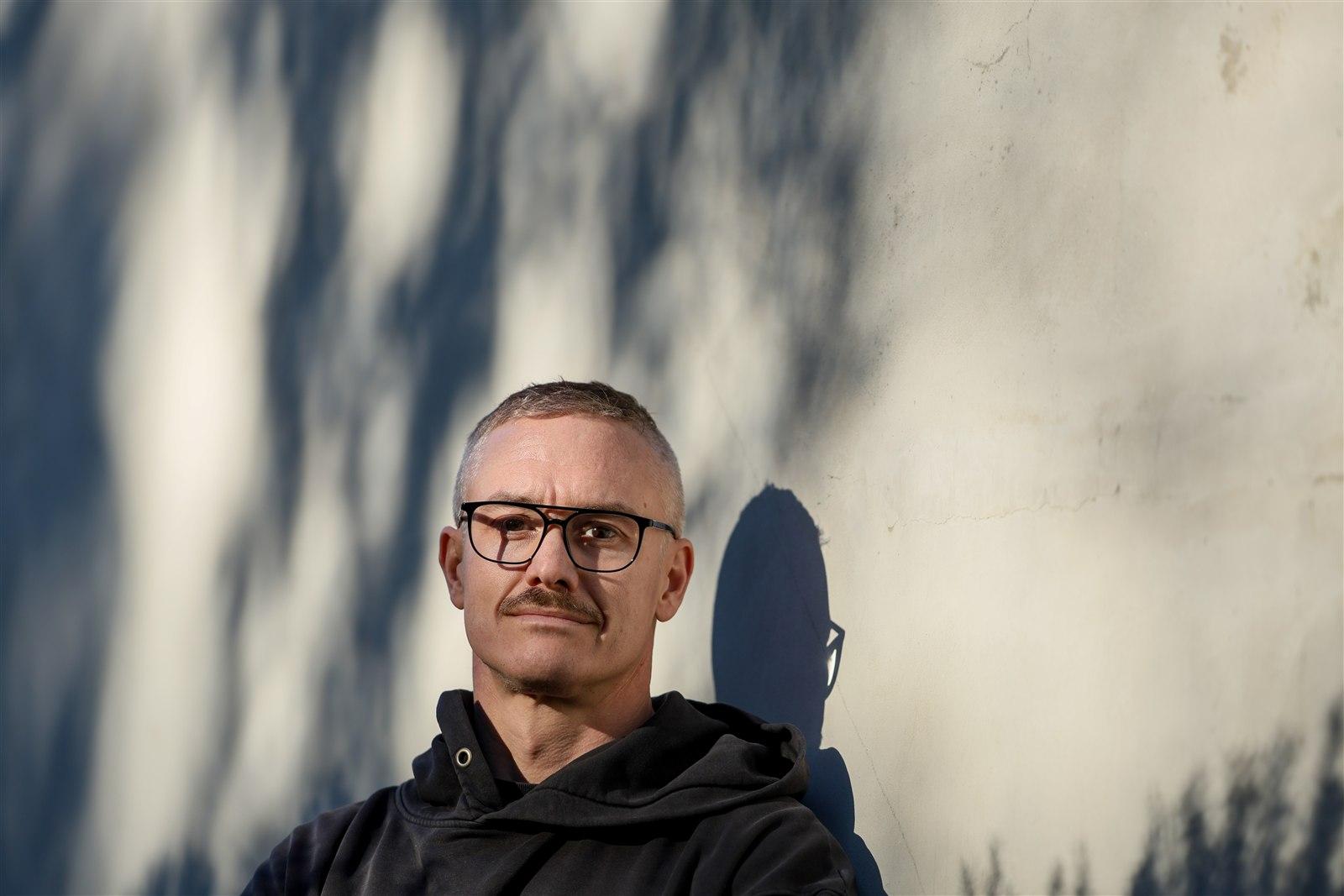
Philipp Hackländer
Independent advisor · Founder · Researcher
A personal starting point
I have advised companies, co-founded two businesses and worked where complex systems came under significant pressure — from international supply chains and the semiconductor crisis to technological and organisational transformation.
Alongside this work, spiritual and contemplative practice has shaped my life for many years. These worlds once appeared separate: strategy, data and organisations on one side; perception, inner development and the question of what truly orients a person on the other.
Today, I am most interested in the relationship between them.
The central observation
People can develop greater clarity, self-regulation and perceptual depth — privately, at work and in their communities. Whether this becomes meaningful change also depends on the world around them: their relationships, roles and economic dependencies.
The reverse is equally true. Organisations and communities cannot become resilient through process and governance alone. Under pressure, their capacity to act depends on whether people can build trust, recognise their contribution and assume responsibility.
I am interested in the relationship between the individual and the system — and in what becomes possible when both are considered together.
A coherent field
The work moves across three connected levels. Keeping them distinct makes it easier to see what is being investigated, where it becomes useful and what allows it to last.
01
Developing and testing ways to understand individual fit, structural identity and recurring patterns without collapsing people into fixed types.
02
Designing the communities, institutions and digital infrastructure that allow individual development to become durable collective capacity.
03
Translating those insights into practical questions across work, leadership, education, community and situations of crisis.
Research
The aim is not to fix people into types. It is to generate useful hypotheses, preserve uncertainty and test what survives contact with real experience.
Which practice, role, way of working and environment fits a person — not in the abstract, but at this point in their life?
How can recurring forms of contribution become visible, testable and portable — while the person retains control of their own information?
When can a recurring limitation, failed path or crisis signal become reusable learning, a better decision rule or a more resilient design?
Contemplative, cultural and esoteric systems can generate hypotheses. Their claims remain distinct from what observation, computation or prospective testing can establish.
Systems
Insight becomes durable only when roles, relationships, institutions and enabling infrastructure evolve with it.
I
Participants becoming contributors; individual capabilities becoming visible; trust and responsibility distributed beyond a few central figures.
II
Governance, partnerships, access and viable contribution models that preserve personal orientation as an initiative grows.
III
Person-controlled AI context, privacy-conscious measurement and connected systems for programmes, knowledge and collaboration.
Applications
Different settings require different interventions. The common thread is agency: helping people and organisations perceive more clearly, contribute meaningfully and act under changing conditions.
Human contribution, professional identity and meaningful roles as AI takes on more standardisable knowledge work.
Clarity, perception, responsibility and social competence in entrepreneurial and organisational settings.
Individual pathways that connect self-understanding with learning, collaboration and practical agency.
Patterns that connect personal, organisational and societal crises — and conditions that allow agency to re-emerge.
Grounded in practice
Former Roland Berger consultant. Technology founder. Advisor in supply-chain, semiconductor, energy and organisational crises. Current work spans AI, coordination patterns, resilient networks and new forms of contribution.
Explore my professional work ↗Next steps
Send me a message if you are working on similar questions around human development, technology, work or community.
We can use a first exchange to find out whether there is a useful connection — without a prepared pitch or predetermined format.